

Which Animal Lives In The Hydrosphere And Lithosphere?
The Four Spheres Of The World
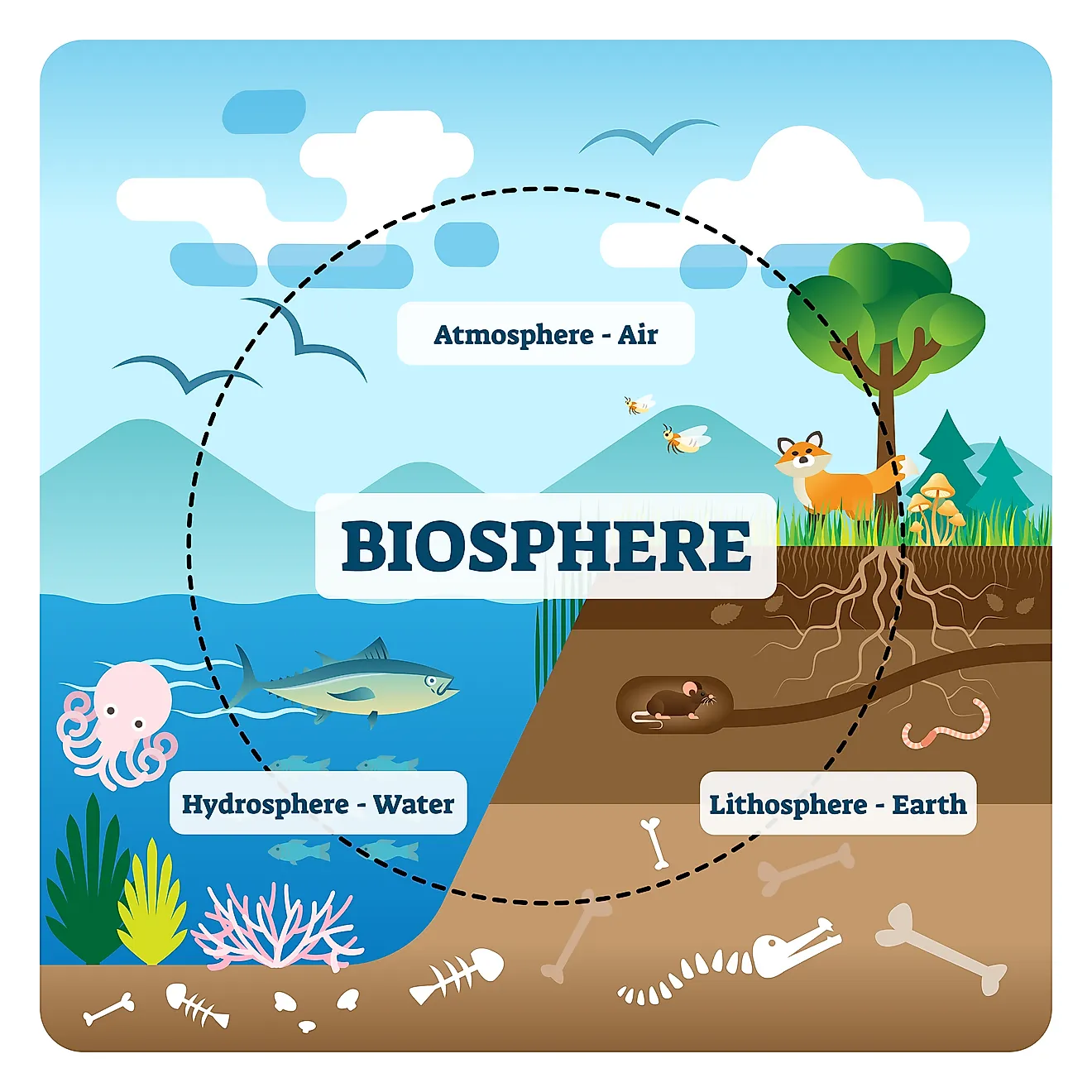
- The iv spheres of the Earth are: the lithosphere, hydrosphere, biosphere, and atmosphere
- The biosphere includes all living life on Earth: animate being, found, fungi, protist and monera
- All four spheres must work in harmony to allow for the remainder of life to succeed of World. Any threat to one sphere, volition have desperate furnishings on the others.
The globe can exist dissever into 1 of four major subsystems, namely: state, water, air, and all living things. These categories are known as spheres, and are the lithosphere, hydrosphere, atmosphere and biosphere, respectively. The first three of these spheres are abiotic, meaning they are not living things, while the quaternary - the biosphere - contains all biotic, or living creatures and organisms (everything from plants, to animals, to bacteria).
Temper
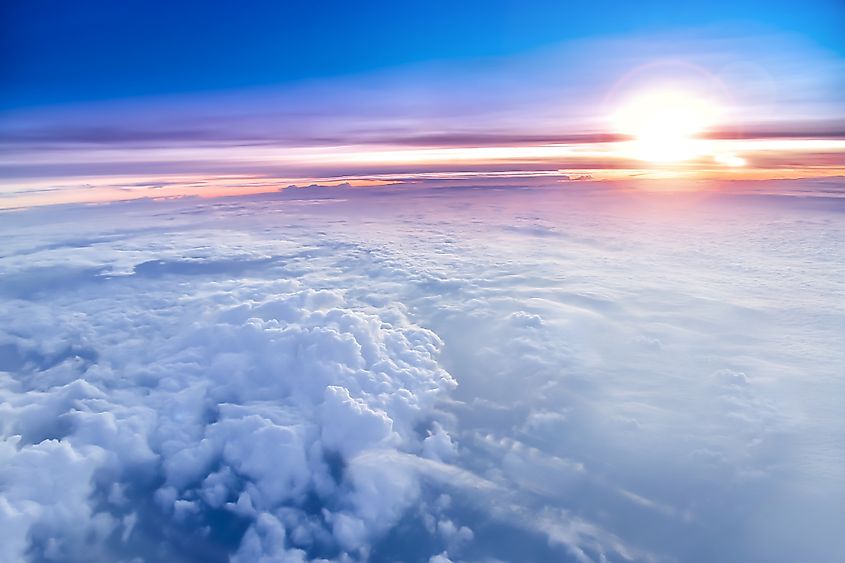
The temper of Globe, which we casually refer to as just 'air', is really made up of a mixture of gases and vapours. The Earth's atmosphere forms a barrier, or bubble effectually the Earth, and is held there by the force of gravity. This keeps the vapours of the atmosphere from escaping into outer space. It is also this atmosphere which makes the earth inhabitable. The combination of chemicals in the air, also equally the way in which the atmosphere creates a barrier between the World and the harmful rays of the sun, makes an surroundings in which animals, plants and human life can thrive.
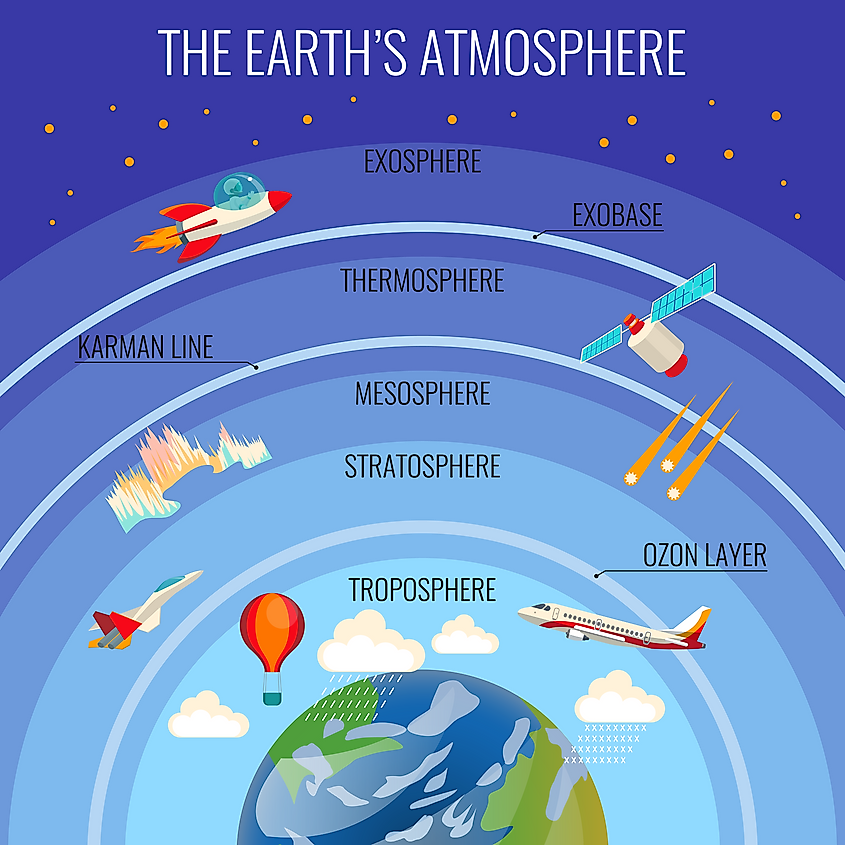
The atmosphere can be separated and identified in several of its own layers, of which there are 5: the troposphere, stratosphere, mesosphere, thermosphere and exosphere. The Troposphere is the layer which holds the majority of the atmosphere, and is closest to the surface of the world. This is besides the area in which nigh organic life lives, on Earth. The other layers extend outward from the surface, and are encompassed past the terminal layer, the Exosphere, before our atmosphere completely dissolves into Outer Space.
The temper of World is actually primarily fabricated from nitrogen, with a composition of 78 percent. The second almost mutual gas in our atmosphere is Oxygen, which makes up 21%, and is the well-nigh of import for both human being and creature life. The tertiary most prominent gas is argon, which is only 0.9 percent. This leaves the remaining 01. percent, which is classified as 'other' every bit no 1 gas is dominant plenty to be pregnant. Yet, this 'other' section does include h2o vapor, neon, carbon dioxide, and methane.
Hydrosphere
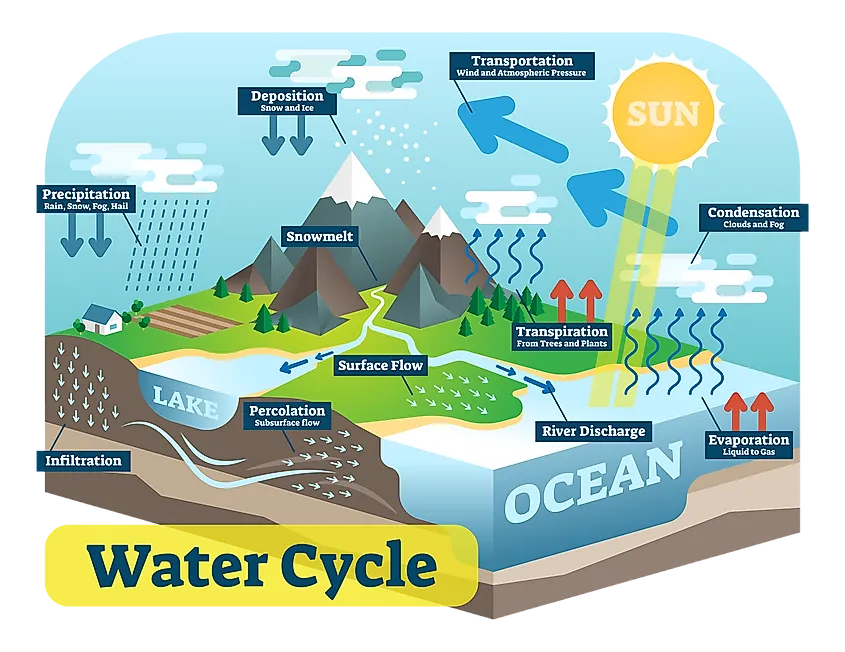
The hydrosphere is the water sphere of Earth. This includes the total amount of water that can be found on the whole planet, from that on the surface - like in lakes, oceans, rivers etc. equally well as water cloak-and-dagger, and in the air. Considering it includes all h2o, this also means that it encompasses water that is constitute in liquid, vapor, or solid (ie ice) form.
Liquid
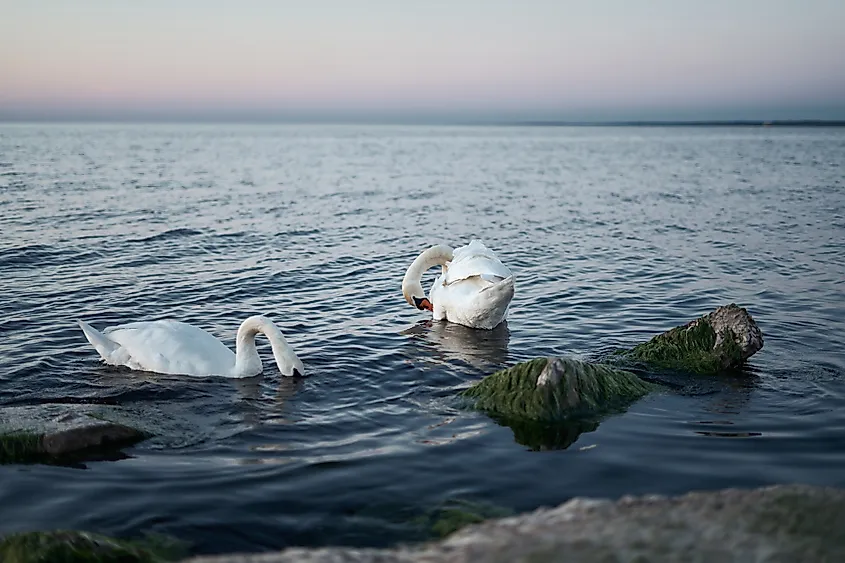
The first type of water most commonly idea of, is liquid h2o. This can be seen in a multifariousness of places and forms beyond the earth. Everything from lakes and seas, to streams, lagoons, rivers, creeks and springs are forms of liquid h2o which connect to form the hydrosphere. There is too an entire organization of surreptitious water that is likewise in liquid form. This h2o is commonly accessed via aquifers, natural springs or wells. The hush-hush water organisation is known as the h2o table, and contains all types of water that has become trapped below the surface. Groundwater fills the spaces between sediment and rock, creating pockets of trapped water. Often, these pockets are tapped by humans via pipelines and wells, but in some cases the water naturally finds its way to the surface via springs and the like. This natural water source is also extremely useful for large constitute life like trees, that need considerably more water than that which they can absorb through pelting and atmospheric wet.
Vapor
Water vapor, is whatsoever type of water that has evaporated, and now takes on a gaseous state. This includes things similar fog and clouds. Water vapor forms an integral office of the water cycle. When liquid h2o evaporates, it turns into a gas, and becomes part of the atmosphere. Here, it can exist redistributed into other parts of the world. For example, a pool - liquid - can be dried up in the sun, forcing the water molecules to alter and evaporate. Now, in gas form, they form a cloud. This cloud is and so blown through the air, where it collects more moisture until the cloud becomes so heavy with water vapor that the vapor becomes liquid once more, falling back to the earth'southward surface as rain.
Solid
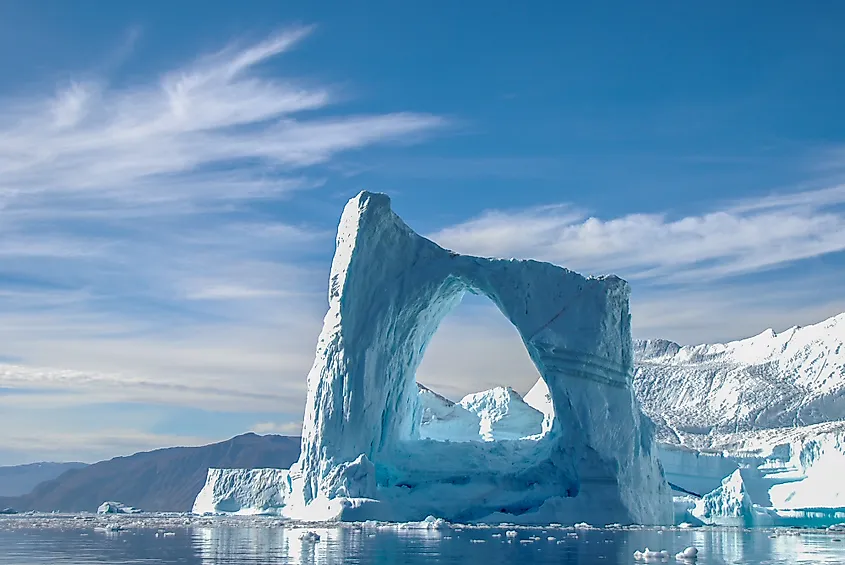
Water in its solid form can exist seen on earth as ice. This includes everything from the polar ice caps, to frozen lakes and bays, frost, snow, glaciers, and icebergs. This poly peptide of the hydrosphere tin actually be subsection into what is known as the cryosphere. While the cryosphere may not be the first affair associated with water and the hydrosphere in general, information technology does play an of import part in the larger system. It helps to regulate the global climate, and is domicile to a variety of animals which rely on this frozen world to alive.
Lithosphere
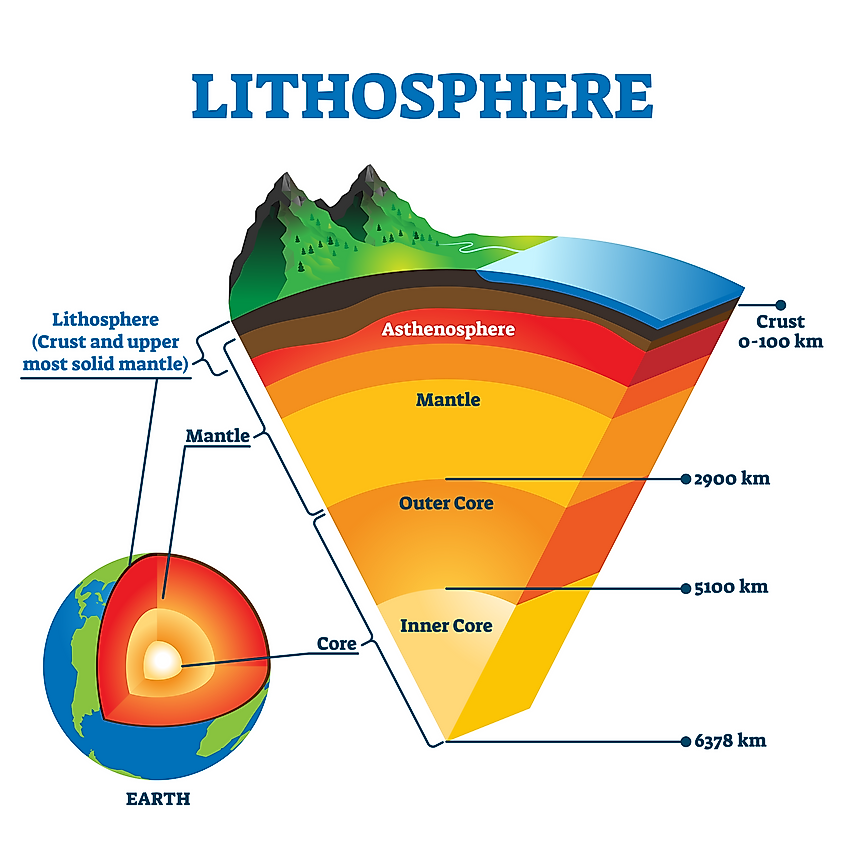
The lithosphere is the 'earth' or country portion of the Earth. It more specifically refers to the rocky outer surface of the Earth's crust, and upper portion of the drape. The Globe itself is split into several layers: the crust, upper and main mantle, the outer core and the inner core. Though all of this is Earth, information technology is simply the more solid upper portion that is included in the lithosphere. This means it is the more often than not solid, minimally viscous portion, as opposed to the more liquid molten lower layers. The lithosphere is the land on which biological life - i.e. the biosphere - exists.
Biosphere
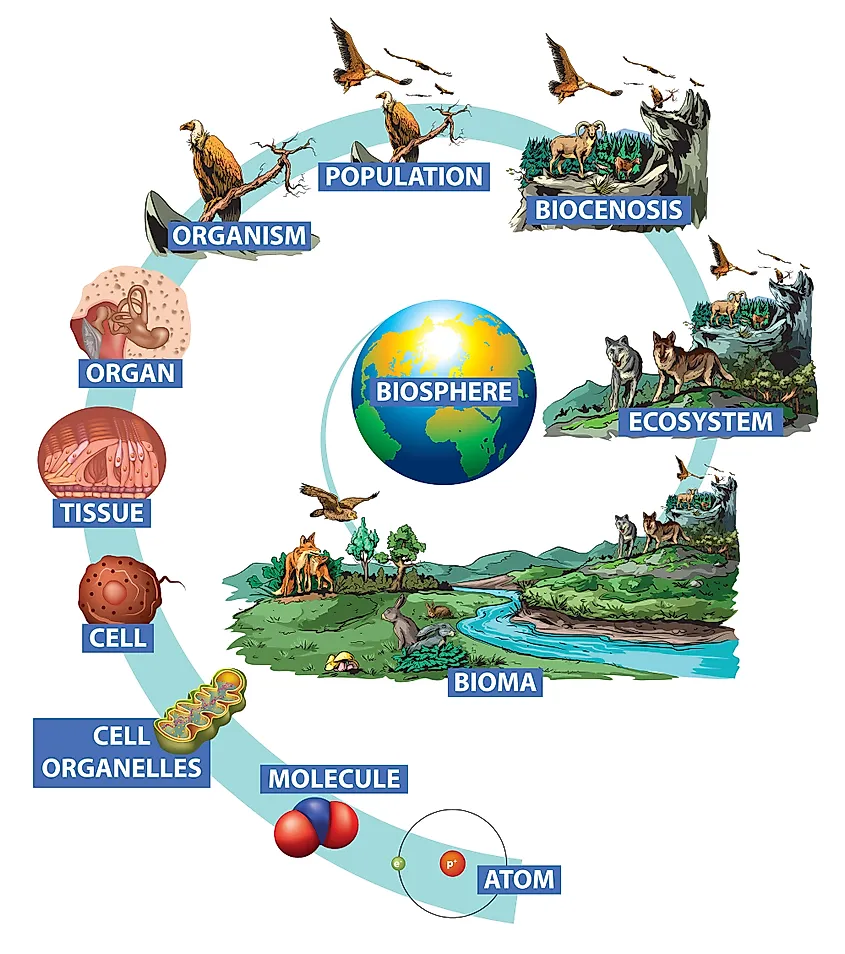
The biosphere is the sphere of the world which includes all organic, living life. Whether this life is on the world's surface, in the atmosphere, or below the ground, it is part of the larger biosphere organisation that makes up life on this planet. In this way, the biosphere blends with the other 3 spheres of Earth. The range of the biosphere is thought to be roughly 20 kilometers, or 12 miles from its highest point, to its deepest. Generally speaking, though, most of the Earth's life is much closer to the surface, and tin can be found within about 500 meters or 1,640 feet beneath sea level, and 6 kilometers, or 3.75 miles above the ocean'south surface.
From the tallest mountain to the deepest ocean, all organic life is office of the biosphere. This includes all types of life, from insects to fungi, animals and birds, plants and organisms like leaner. This life is and then divided into a series of classifications: kingdoms, phylum, classes, orders, families, genus, and species. There are 5 different kingdoms, known as: creature, plant, fungi, protist and monera, and all of these encompass the entirety of the biosphere. The large biosphere is then further cleaved down into biomes and ecosystems, which are more than specific working systems of animals and plants in whatsoever given area. Together, they form an intricate web of life which, when kept in balance, allows our Earth to run in harmony.
Source: https://www.worldatlas.com/geography/the-four-spheres-of-the-earth.html
Posted by: hambywherfust.blogspot.com
0 Response to "Which Animal Lives In The Hydrosphere And Lithosphere?"
Post a Comment