

Which Of The Following Would Be Found As Part Of A Animal Cell But Not An Plant Cell?
Chapter 3: Introduction to Jail cell Construction and Function
iii.iii Eukaryotic Cells
Past the end of this section, yous will exist able to:
- Describe the structure of eukaryotic institute and animal cells
- Land the part of the plasma membrane
- Summarize the functions of the major jail cell organelles
- Describe the cytoskeleton and extracellular matrix
Watch a video near oxygen in the atmosphere.
At this point, it should be articulate that eukaryotic cells have a more complex structure than do prokaryotic cells. Organelles allow for various functions to occur in the jail cell at the aforementioned time. Before discussing the functions of organelles within a eukaryotic prison cell, allow us outset examine ii of import components of the cell: the plasma membrane and the cytoplasm.
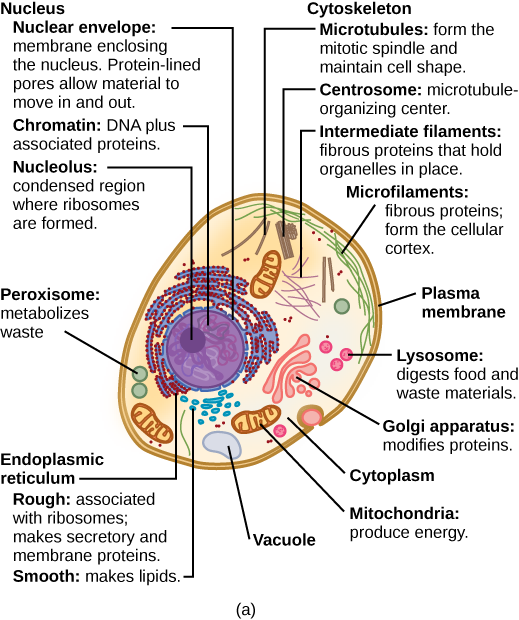
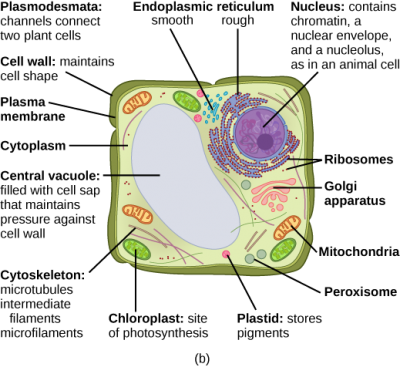
What structures does a plant jail cell have that an animal cell does not have? What structures does an animal cell have that a institute cell does not have? Plant cells have plasmodesmata, a cell wall, a large central vacuole, chloroplasts, and plastids. Animal cells have lysosomes and centrosomes.
The Plasma Membrane
Like prokaryotes, eukaryotic cells take a plasma membrane (Effigy 3.9) fabricated up of a phospholipid bilayer with embedded proteins that separates the internal contents of the cell from its surrounding environment. A phospholipid is a lipid molecule composed of ii fatty acid chains, a glycerol courage, and a phosphate group. The plasma membrane regulates the passage of some substances, such every bit organic molecules, ions, and water, preventing the passage of some to maintain internal conditions, while actively bringing in or removing others. Other compounds move passively across the membrane.
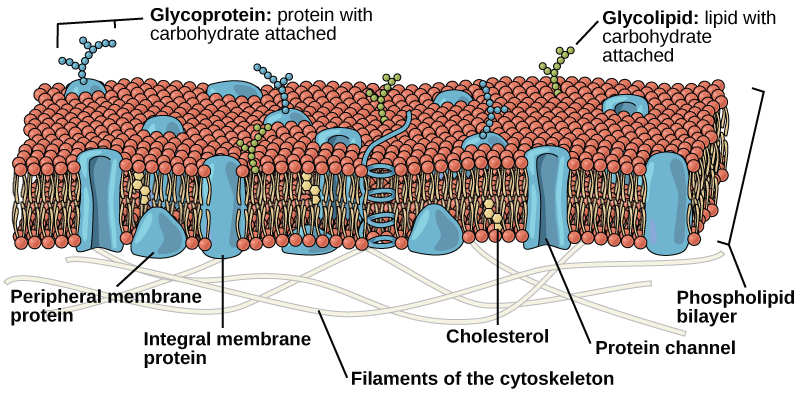
The plasma membranes of cells that specialize in assimilation are folded into fingerlike projections called microvilli (singular = microvillus). This folding increases the surface expanse of the plasma membrane. Such cells are typically establish lining the small intestine, the organ that absorbs nutrients from digested food. This is an fantabulous example of course matching the office of a structure.
People with celiac illness have an immune response to gluten, which is a protein institute in wheat, barley, and rye. The immune response damages microvilli, and thus, afflicted individuals cannot absorb nutrients. This leads to malnutrition, cramping, and diarrhea. Patients suffering from celiac disease must follow a gluten-free diet.
The Cytoplasm
The cytoplasm comprises the contents of a cell betwixt the plasma membrane and the nuclear envelope (a structure to be discussed soon). It is made up of organelles suspended in the gel-like cytosol, the cytoskeleton, and diverse chemicals. Even though the cytoplasm consists of 70 to 80 percent water, it has a semi-solid consistency, which comes from the proteins within it. Notwithstanding, proteins are not the only organic molecules found in the cytoplasm. Glucose and other unproblematic sugars, polysaccharides, amino acids, nucleic acids, fat acids, and derivatives of glycerol are constitute there too. Ions of sodium, potassium, calcium, and many other elements are also dissolved in the cytoplasm. Many metabolic reactions, including protein synthesis, take place in the cytoplasm.
The Cytoskeleton
If you were to remove all the organelles from a cell, would the plasma membrane and the cytoplasm be the only components left? No. Within the cytoplasm, there would notwithstanding be ions and organic molecules, plus a network of protein fibers that helps to maintain the shape of the cell, secures certain organelles in specific positions, allows cytoplasm and vesicles to move within the jail cell, and enables unicellular organisms to move independently. Collectively, this network of protein fibers is known as the cytoskeleton. In that location are iii types of fibers inside the cytoskeleton: microfilaments, too known every bit actin filaments, intermediate filaments, and microtubules (Figure three.10).
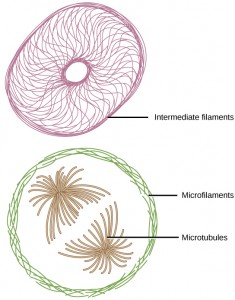
Microfilaments are the thinnest of the cytoskeletal fibers and part in moving cellular components, for case, during jail cell division. They as well maintain the structure of microvilli, the all-encompassing folding of the plasma membrane found in cells dedicated to absorption. These components are likewise common in muscle cells and are responsible for muscle cell contraction. Intermediate filaments are of intermediate diameter and have structural functions, such as maintaining the shape of the prison cell and anchoring organelles. Keratin, the compound that strengthens hair and nails, forms ane blazon of intermediate filament. Microtubules are the thickest of the cytoskeletal fibers. These are hollow tubes that tin dissolve and reform quickly. Microtubules guide organelle movement and are the structures that pull chromosomes to their poles during jail cell partition. They are besides the structural components of flagella and cilia. In cilia and flagella, the microtubules are organized as a circle of nine double microtubules on the exterior and two microtubules in the eye.
The centrosome is a region well-nigh the nucleus of animal cells that functions as a microtubule-organizing middle. Information technology contains a pair of centrioles, 2 structures that lie perpendicular to each other. Each centriole is a cylinder of nine triplets of microtubules.
The centrosome replicates itself before a jail cell divides, and the centrioles play a role in pulling the duplicated chromosomes to opposite ends of the dividing jail cell. Withal, the exact function of the centrioles in cell division is non clear, since cells that have the centrioles removed can even so divide, and constitute cells, which lack centrioles, are capable of prison cell partitioning.
Flagella and Cilia
Flagella (atypical = flagellum) are long, hair-similar structures that extend from the plasma membrane and are used to movement an entire cell, (for example, sperm, Euglena). When present, the cell has just one flagellum or a few flagella. When cilia (singular = cilium) are present, still, they are many in number and extend along the unabridged surface of the plasma membrane. They are brusque, hair-similar structures that are used to motion entire cells (such as paramecium) or move substances along the outer surface of the cell (for example, the cilia of cells lining the fallopian tubes that movement the ovum toward the uterus, or cilia lining the cells of the respiratory tract that move particulate matter toward the throat that mucus has trapped).
The Endomembrane Organisation
The endomembrane organization (endo = within) is a grouping of membranes and organelles in eukaryotic cells that work together to modify, package, and transport lipids and proteins. Information technology includes the nuclear envelope, lysosomes, vesicles, endoplasmic reticulum and the Golgi apparatus, which we will cover shortly. Although not technically within the cell, the plasma membrane is included in the endomembrane system because, equally you volition run into, information technology interacts with the other endomembranous organelles.
The Nucleus
Typically, the nucleus is the most prominent organelle in a cell. The nucleus (plural = nuclei) houses the cell's Deoxyribonucleic acid in the form of chromatin and directs the synthesis of ribosomes and proteins. Let u.s.a. await at information technology in more detail (Effigy 3.11).
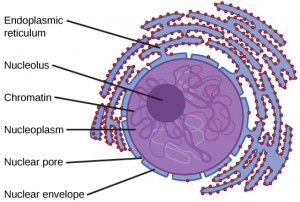
The nuclear envelope is a double-membrane structure that constitutes the outermost portion of the nucleus (Figure 3.11). Both the inner and outer membranes of the nuclear envelope are phospholipid bilayers.
The nuclear envelope is punctuated with pores that control the passage of ions, molecules, and RNA between the nucleoplasm and the cytoplasm.
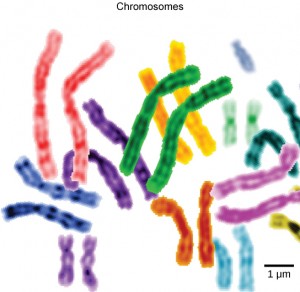
To understand chromatin, information technology is helpful to starting time consider chromosomes. Chromosomes are structures within the nucleus that are made up of Deoxyribonucleic acid, the hereditary fabric, and proteins. This combination of DNA and proteins is called chromatin. In eukaryotes, chromosomes are linear structures. Every species has a specific number of chromosomes in the nucleus of its body cells. For instance, in humans, the chromosome number is 46, whereas in fruit flies, the chromosome number is eight.
Chromosomes are only visible and distinguishable from i some other when the cell is getting ready to separate. When the cell is in the growth and maintenance phases of its life bicycle, the chromosomes resemble an unwound, jumbled agglomeration of threads.
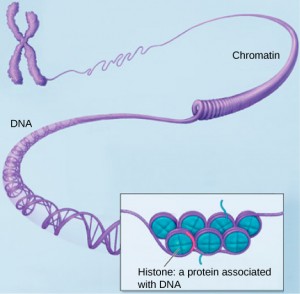
Nosotros already know that the nucleus directs the synthesis of ribosomes, merely how does it practice this? Some chromosomes take sections of DNA that encode ribosomal RNA. A darkly stained area inside the nucleus, chosen the nucleolus (plural = nucleoli), aggregates the ribosomal RNA with associated proteins to gather the ribosomal subunits that are then transported through the nuclear pores into the cytoplasm.
The Endoplasmic Reticulum
The endoplasmic reticulum (ER) is a serial of interconnected membranous tubules that collectively modify proteins and synthesize lipids. Even so, these 2 functions are performed in separate areas of the endoplasmic reticulum: the rough endoplasmic reticulum and the smooth endoplasmic reticulum, respectively.
The hollow portion of the ER tubules is chosen the lumen or cisternal space. The membrane of the ER, which is a phospholipid bilayer embedded with proteins, is continuous with the nuclear envelope.
The rough endoplasmic reticulum (RER) is and then named because the ribosomes attached to its cytoplasmic surface requite it a studded appearance when viewed through an electron microscope.
The ribosomes synthesize proteins while fastened to the ER, resulting in the transfer of their newly synthesized proteins into the lumen of the RER where they undergo modifications such as folding or addition of sugars. The RER also makes phospholipids for jail cell membranes.
If the phospholipids or modified proteins are not destined to stay in the RER, they volition be packaged inside vesicles and transported from the RER by budding from the membrane. Since the RER is engaged in modifying proteins that will be secreted from the cell, it is abundant in cells that secrete proteins, such as the liver.
The smooth endoplasmic reticulum (SER) is continuous with the RER but has few or no ribosomes on its cytoplasmic surface. The SER'south functions include synthesis of carbohydrates, lipids (including phospholipids), and steroid hormones; detoxification of medications and poisons; booze metabolism; and storage of calcium ions.
The Golgi Apparatus
Nosotros have already mentioned that vesicles can bud from the ER, simply where do the vesicles become? Earlier reaching their final destination, the lipids or proteins within the transport vesicles need to be sorted, packaged, and tagged so that they current of air upwardly in the right place. The sorting, tagging, packaging, and distribution of lipids and proteins take place in the Golgi apparatus (also called the Golgi body), a series of flattened bleary sacs.
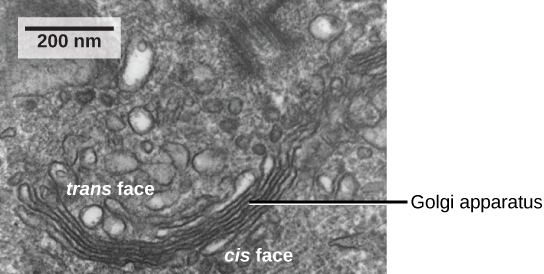
The Golgi apparatus has a receiving face up nearly the endoplasmic reticulum and a releasing confront on the side away from the ER, toward the cell membrane. The transport vesicles that course from the ER travel to the receiving face, fuse with information technology, and empty their contents into the lumen of the Golgi apparatus. Equally the proteins and lipids travel through the Golgi, they undergo further modifications. The most frequent modification is the improver of brusk chains of carbohydrate molecules. The newly modified proteins and lipids are then tagged with pocket-size molecular groups to enable them to exist routed to their proper destinations.
Finally, the modified and tagged proteins are packaged into vesicles that bud from the contrary face of the Golgi. While some of these vesicles, send vesicles, deposit their contents into other parts of the cell where they will be used, others, secretory vesicles, fuse with the plasma membrane and release their contents outside the prison cell.
The amount of Golgi in different prison cell types over again illustrates that class follows function inside cells. Cells that engage in a great deal of secretory activity (such equally cells of the salivary glands that secrete digestive enzymes or cells of the allowed system that secrete antibodies) accept an abundant number of Golgi.
In plant cells, the Golgi has an additional function of synthesizing polysaccharides, some of which are incorporated into the cell wall and some of which are used in other parts of the cell.
Lysosomes
In animal cells, the lysosomes are the cell's "garbage disposal." Digestive enzymes within the lysosomes help the breakdown of proteins, polysaccharides, lipids, nucleic acids, and even worn-out organelles. In single-celled eukaryotes, lysosomes are of import for digestion of the food they ingest and the recycling of organelles. These enzymes are agile at a much lower pH (more acidic) than those located in the cytoplasm. Many reactions that take place in the cytoplasm could not occur at a low pH, thus the advantage of compartmentalizing the eukaryotic jail cell into organelles is credible.
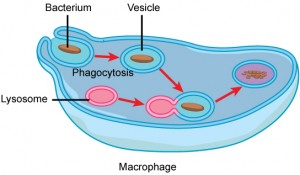
Lysosomes also employ their hydrolytic enzymes to destroy affliction-causing organisms that might enter the cell. A skillful case of this occurs in a group of white blood cells called macrophages, which are part of your body'southward allowed system. In a process known equally phagocytosis, a department of the plasma membrane of the macrophage invaginates (folds in) and engulfs a pathogen. The invaginated department, with the pathogen inside, then pinches itself off from the plasma membrane and becomes a vesicle. The vesicle fuses with a lysosome. The lysosome's hydrolytic enzymes and so destroy the pathogen (Figure 3.15).
Vesicles and Vacuoles
Vesicles and vacuoles are membrane-jump sacs that function in storage and transport. Vacuoles are somewhat larger than vesicles, and the membrane of a vacuole does not fuse with the membranes of other cellular components. Vesicles tin fuse with other membranes within the cell arrangement. Additionally, enzymes inside constitute vacuoles tin can break downward macromolecules.
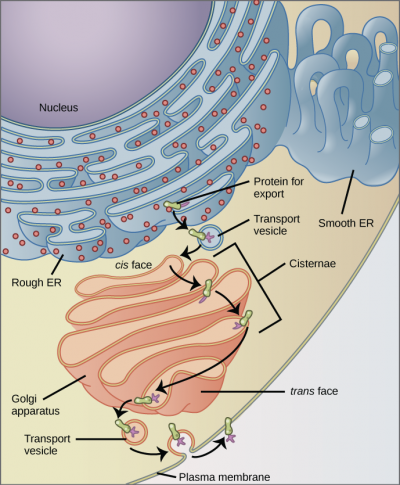
Why does the cis face up of the Golgi not confront the plasma membrane?
<!– Considering that face receives chemicals from the ER, which is toward the centre of the jail cell. –>
Ribosomes
Ribosomes are the cellular structures responsible for poly peptide synthesis. When viewed through an electron microscope, free ribosomes appear every bit either clusters or single tiny dots floating freely in the cytoplasm. Ribosomes may exist attached to either the cytoplasmic side of the plasma membrane or the cytoplasmic side of the endoplasmic reticulum. Electron microscopy has shown that ribosomes consist of large and small subunits. Ribosomes are enzyme complexes that are responsible for poly peptide synthesis.
Because protein synthesis is essential for all cells, ribosomes are found in practically every jail cell, although they are smaller in prokaryotic cells. They are particularly arable in immature ruby blood cells for the synthesis of hemoglobin, which functions in the transport of oxygen throughout the body.
Mitochondria
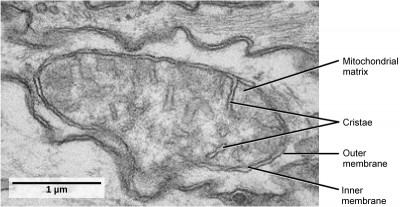
Mitochondria (atypical = mitochondrion) are often called the "powerhouses" or "free energy factories" of a jail cell because they are responsible for making adenosine triphosphate (ATP), the cell's main energy-carrying molecule. The formation of ATP from the breakup of glucose is known as cellular respiration. Mitochondria are oval-shaped, double-membrane organelles (Figure 3.17) that have their own ribosomes and Deoxyribonucleic acid. Each membrane is a phospholipid bilayer embedded with proteins. The inner layer has folds called cristae, which increment the surface expanse of the inner membrane. The area surrounded past the folds is called the mitochondrial matrix. The cristae and the matrix have different roles in cellular respiration.
In keeping with our theme of form following office, information technology is of import to signal out that musculus cells have a very high concentration of mitochondria because muscle cells need a lot of energy to contract.
Peroxisomes
Peroxisomes are small, round organelles enclosed by single membranes. They carry out oxidation reactions that break down fatty acids and amino acids. They too detoxify many poisons that may enter the body. Booze is detoxified past peroxisomes in liver cells. A byproduct of these oxidation reactions is hydrogen peroxide, H2Otwo, which is independent within the peroxisomes to prevent the chemical from causing damage to cellular components outside of the organelle. Hydrogen peroxide is safely broken down by peroxisomal enzymes into water and oxygen.
Brute Cells versus Plant Cells
Despite their fundamental similarities, there are some striking differences between beast and plant cells (see Table 3.1). Beast cells take centrioles, centrosomes (discussed under the cytoskeleton), and lysosomes, whereas plant cells do non. Plant cells have a cell wall, chloroplasts, plasmodesmata, and plastids used for storage, and a large primal vacuole, whereas animal cells exercise non.
The Cell Wall
In Figure 3.8b, the diagram of a plant cell, you run across a structure external to the plasma membrane called the cell wall. The cell wall is a rigid covering that protects the cell, provides structural support, and gives shape to the cell. Fungal and protist cells also accept cell walls.
While the principal component of prokaryotic cell walls is peptidoglycan, the major organic molecule in the plant cell wall is cellulose, a polysaccharide fabricated up of long, straight chains of glucose units. When nutritional information refers to dietary cobweb, it is referring to the cellulose content of food.
Chloroplasts
Like mitochondria, chloroplasts likewise have their ain DNA and ribosomes. Chloroplasts function in photosynthesis and can be establish in eukaryotic cells such as plants and algae. In photosynthesis, carbon dioxide, water, and light energy are used to brand glucose and oxygen. This is the major difference betwixt plants and animals: Plants (autotrophs) are able to make their own food, similar glucose, whereas animals (heterotrophs) must rely on other organisms for their organic compounds or food source.
Like mitochondria, chloroplasts have outer and inner membranes, merely within the space enclosed by a chloroplast's inner membrane is a set of interconnected and stacked, fluid-filled membrane sacs called thylakoids (Figure 3.eighteen). Each stack of thylakoids is chosen a granum (plural = grana). The fluid enclosed past the inner membrane and surrounding the grana is called the stroma.
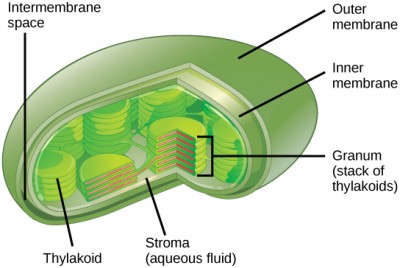
The chloroplasts contain a green pigment called chlorophyll, which captures the energy of sunlight for photosynthesis. Like found cells, photosynthetic protists also have chloroplasts. Some bacteria too perform photosynthesis, but they do not accept chloroplasts. Their photosynthetic pigments are located in the thylakoid membrane within the cell itself.
Development in Activity
Endosymbiosis: We have mentioned that both mitochondria and chloroplasts contain DNA and ribosomes. Take you wondered why? Strong evidence points to endosymbiosis as the explanation.
Symbiosis is a relationship in which organisms from 2 split up species alive in close clan and typically showroom specific adaptations to each other. Endosymbiosis (endo-= within) is a relationship in which i organism lives inside the other. Endosymbiotic relationships abound in nature. Microbes that produce vitamin Yard live within the man gut. This human relationship is beneficial for us because we are unable to synthesize vitamin M. It is also beneficial for the microbes because they are protected from other organisms and are provided a stable habitat and abundant food past living within the large intestine.
Scientists have long noticed that bacteria, mitochondria, and chloroplasts are like in size. Nosotros too know that mitochondria and chloroplasts have Dna and ribosomes, just as leaner do and they resemble the types constitute in bacteria. Scientists believe that host cells and bacteria formed a mutually beneficial endosymbiotic relationship when the host cells ingested aerobic bacteria and cyanobacteria simply did not destroy them. Through evolution, these ingested bacteria became more specialized in their functions, with the aerobic bacteria becoming mitochondria and the photosynthetic bacteria condign chloroplasts.
The Central Vacuole
Previously, we mentioned vacuoles as essential components of plant cells. If you expect at Effigy three.eightb, you will see that found cells each have a big, fundamental vacuole that occupies virtually of the cell. The central vacuole plays a fundamental role in regulating the cell's concentration of water in changing ecology conditions. In plant cells, the liquid inside the central vacuole provides turgor pressure level, which is the outward pressure acquired by the fluid within the cell. Have you lot always noticed that if you lot forget to water a plant for a few days, it wilts? That is considering as the h2o concentration in the soil becomes lower than the water concentration in the plant, h2o moves out of the central vacuoles and cytoplasm and into the soil. Equally the central vacuole shrinks, it leaves the cell wall unsupported. This loss of support to the cell walls of a plant results in the wilted appearance. Additionally, this fluid has a very bitter taste, which discourages consumption past insects and animals. The primal vacuole also functions to shop proteins in developing seed cells.
Extracellular Matrix of Animal Cells
About beast cells release materials into the extracellular space. The master components of these materials are glycoproteins and the protein collagen. Collectively, these materials are called the extracellular matrix (Effigy 3.nineteen). Not just does the extracellular matrix agree the cells together to form a tissue, but it likewise allows the cells within the tissue to communicate with each other.
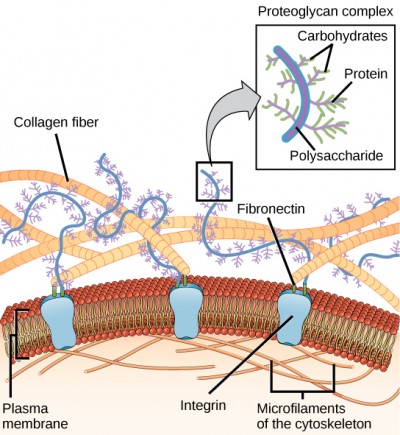
Blood clotting provides an example of the role of the extracellular matrix in jail cell communication. When the cells lining a blood vessel are damaged, they display a poly peptide receptor called tissue factor. When tissue gene binds with another cistron in the extracellular matrix, it causes platelets to attach to the wall of the damaged claret vessel, stimulates adjacent smoothen muscle cells in the blood vessel to contract (thus constricting the claret vessel), and initiates a series of steps that stimulate the platelets to produce clotting factors.
Intercellular Junctions
Cells can besides communicate with each other by direct contact, referred to equally intercellular junctions. At that place are some differences in the ways that constitute and animal cells practice this. Plasmodesmata (singular = plasmodesma) are junctions between plant cells, whereas animal cell contacts include tight and gap junctions, and desmosomes.
In general, long stretches of the plasma membranes of neighboring constitute cells cannot touch one another because they are separated past the prison cell walls surrounding each cell. Plasmodesmata are numerous channels that laissez passer between the cell walls of adjacent establish cells, connecting their cytoplasm and enabling betoken molecules and nutrients to exist transported from cell to jail cell (Figure three.20a).
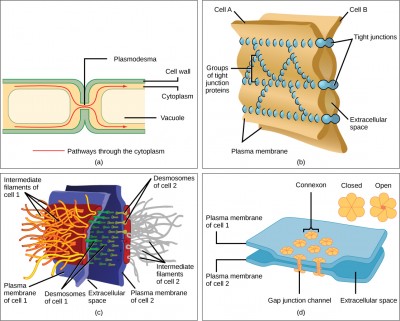
A tight junction is a watertight seal betwixt ii adjacent animal cells (Figure 3.xxb). Proteins agree the cells tightly confronting each other. This tight adhesion prevents materials from leaking between the cells. Tight junctions are typically found in the epithelial tissue that lines internal organs and cavities, and composes most of the peel. For example, the tight junctions of the epithelial cells lining the urinary bladder forestall urine from leaking into the extracellular infinite.
Likewise found only in creature cells are desmosomes, which human activity like spot welds between side by side epithelial cells (Figure 3.twentyc). They keep cells together in a sail-like germination in organs and tissues that stretch, similar the skin, centre, and muscles.
Gap junctions in animate being cells are similar plasmodesmata in plant cells in that they are channels between adjacent cells that permit for the transport of ions, nutrients, and other substances that enable cells to communicate (Figure 3.xxd). Structurally, all the same, gap junctions and plasmodesmata differ.
Cell Component | Function | Present in Prokaryotes? | Present in Animal Cells? | Present in Institute Cells? |
|---|---|---|---|---|
| Plasma membrane | Separates jail cell from external environment; controls passage of organic molecules, ions, water, oxygen, and wastes into and out of the cell | Yes | Yes | Yep |
| Cytoplasm | Provides structure to prison cell; site of many metabolic reactions; medium in which organelles are establish | Yes | Yes | Yes |
| Nucleoid | Location of DNA | Yes | No | No |
| Nucleus | Cell organelle that houses DNA and directs synthesis of ribosomes and proteins | No | Yes | Yep |
| Ribosomes | Poly peptide synthesis | Yes | Aye | Yes |
| Mitochondria | ATP production/cellular respiration | No | Yes | Yes |
| Peroxisomes | Oxidizes and breaks down fatty acids and amino acids, and detoxifies poisons | No | Yes | Yes |
| Vesicles and vacuoles | Storage and transport; digestive office in plant cells | No | Aye | Yes |
| Centrosome | Unspecified role in cell division in animal cells; organizing heart of microtubules in animal cells | No | Yes | No |
| Lysosomes | Digestion of macromolecules; recycling of worn-out organelles | No | Yes | No |
| Cell wall | Protection, structural back up and maintenance of prison cell shape | Yes, primarily peptidoglycan in bacteria but non Archaea | No | Yes, primarily cellulose |
| Chloroplasts | Photosynthesis | No | No | Yes |
| Endoplasmic reticulum | Modifies proteins and synthesizes lipids | No | Yes | Yeah |
| Golgi appliance | Modifies, sorts, tags, packages, and distributes lipids and proteins | No | Yes | Yes |
| Cytoskeleton | Maintains jail cell'due south shape, secures organelles in specific positions, allows cytoplasm and vesicles to move within the cell, and enables unicellular organisms to motility independently | Yes | Yes | Yes |
| Flagella | Cellular locomotion | Some | Some | No, except for some institute sperm. |
| Cilia | Cellular locomotion, movement of particles along extracellular surface of plasma membrane, and filtration | No | Some | No |
Department Summary
Like a prokaryotic jail cell, a eukaryotic cell has a plasma membrane, cytoplasm, and ribosomes, just a eukaryotic cell is typically larger than a prokaryotic prison cell, has a truthful nucleus (meaning its Deoxyribonucleic acid is surrounded by a membrane), and has other membrane-bound organelles that permit for compartmentalization of functions. The plasma membrane is a phospholipid bilayer embedded with proteins. The nucleolus within the nucleus is the site for ribosome assembly. Ribosomes are found in the cytoplasm or are attached to the cytoplasmic side of the plasma membrane or endoplasmic reticulum. They perform protein synthesis. Mitochondria perform cellular respiration and produce ATP. Peroxisomes suspension downwardly fat acids, amino acids, and some toxins. Vesicles and vacuoles are storage and send compartments. In plant cells, vacuoles also assistance intermission downwards macromolecules.
Fauna cells besides have a centrosome and lysosomes. The centrosome has two bodies, the centrioles, with an unknown role in cell sectionalization. Lysosomes are the digestive organelles of beast cells.
Plant cells have a cell wall, chloroplasts, and a central vacuole. The plant cell wall, whose chief component is cellulose, protects the jail cell, provides structural support, and gives shape to the prison cell. Photosynthesis takes identify in chloroplasts. The cardinal vacuole expands, enlarging the cell without the demand to produce more cytoplasm.
The endomembrane system includes the nuclear envelope, the endoplasmic reticulum, Golgi apparatus, lysosomes, vesicles, too as the plasma membrane. These cellular components piece of work together to modify, package, tag, and transport membrane lipids and proteins.
The cytoskeleton has three different types of protein elements. Microfilaments provide rigidity and shape to the cell, and facilitate cellular movements. Intermediate filaments bear tension and anchor the nucleus and other organelles in place. Microtubules help the cell resist compression, serve as tracks for motor proteins that motion vesicles through the cell, and pull replicated chromosomes to opposite ends of a dividing cell. They are too the structural elements of centrioles, flagella, and cilia.
Creature cells communicate through their extracellular matrices and are connected to each other by tight junctions, desmosomes, and gap junctions. Plant cells are connected and communicate with each other by plasmodesmata.
cell wall: a rigid cell covering fabricated of cellulose in plants, peptidoglycan in bacteria, not-peptidoglycan compounds in Archaea, and chitin in fungi that protects the cell, provides structural support, and gives shape to the cell
fundamental vacuole: a big plant cell organelle that acts as a storage compartment, water reservoir, and site of macromolecule deposition
chloroplast: a plant prison cell organelle that carries out photosynthesis
cilium: (plural: cilia) a curt, hair-like structure that extends from the plasma membrane in big numbers and is used to movement an entire cell or move substances along the outer surface of the cell
cytoplasm: the unabridged region between the plasma membrane and the nuclear envelope, consisting of organelles suspended in the gel-like cytosol, the cytoskeleton, and various chemicals
cytoskeleton: the network of poly peptide fibers that collectively maintains the shape of the prison cell, secures some organelles in specific positions, allows cytoplasm and vesicles to move within the cell, and enables unicellular organisms to move
cytosol: the gel-like textile of the cytoplasm in which cell structures are suspended
desmosome: a linkage between adjacent epithelial cells that forms when cadherins in the plasma membrane attach to intermediate filaments
endomembrane system: the group of organelles and membranes in eukaryotic cells that work together to modify, bundle, and ship lipids and proteins
endoplasmic reticulum (ER): a series of interconnected membranous structures within eukaryotic cells that collectively modify proteins and synthesize lipids
extracellular matrix: the material, primarily collagen, glycoproteins, and proteoglycans, secreted from beast cells that holds cells together equally a tissue, allows cells to communicate with each other, and provides mechanical protection and anchoring for cells in the tissue
flagellum: (plural: flagella) the long, hair-similar construction that extends from the plasma membrane and is used to motility the cell
gap junction: a aqueduct between 2 adjacent beast cells that allows ions, nutrients, and other depression-molecular weight substances to pass between the cells, enabling the cells to communicate
Golgi apparatus: a eukaryotic organelle made up of a serial of stacked membranes that sorts, tags, and packages lipids and proteins for distribution
lysosome: an organelle in an animal prison cell that functions every bit the cell's digestive component; it breaks down proteins, polysaccharides, lipids, nucleic acids, and even worn-out organelles
mitochondria: (singular: mitochondrion) the cellular organelles responsible for carrying out cellular respiration, resulting in the product of ATP, the prison cell's main energy-carrying molecule
nuclear envelope: the double-membrane structure that constitutes the outermost portion of the nucleus
nucleolus: the darkly staining torso within the nucleus that is responsible for assembling ribosomal subunits
nucleus: the cell organelle that houses the cell's Deoxyribonucleic acid and directs the synthesis of ribosomes and proteins
peroxisome: a small, round organelle that contains hydrogen peroxide, oxidizes fatty acids and amino acids, and detoxifies many poisons
plasma membrane: a phospholipid bilayer with embedded (integral) or attached (peripheral) proteins that separates the internal contents of the cell from its surrounding surround
plasmodesma: (plural: plasmodesmata) a channel that passes between the prison cell walls of adjacent plant cells, connects their cytoplasm, and allows materials to be transported from cell to jail cell
ribosome: a cellular structure that carries out poly peptide synthesis
crude endoplasmic reticulum (RER): the region of the endoplasmic reticulum that is studded with ribosomes and engages in poly peptide modification
smoothen endoplasmic reticulum (SER): the region of the endoplasmic reticulum that has few or no ribosomes on its cytoplasmic surface and synthesizes carbohydrates, lipids, and steroid hormones; detoxifies chemicals like pesticides, preservatives, medications, and environmental pollutants, and stores calcium ions
tight junction: a house seal between two next animal cells created by protein adherence
vacuole: a membrane-bound sac, somewhat larger than a vesicle, that functions in cellular storage and transport
vesicle: a pocket-size, membrane-leap sac that functions in cellular storage and send; its membrane is capable of fusing with the plasma membrane and the membranes of the endoplasmic reticulum and Golgi appliance
Media Attribution
- Figure three.11: modification of work by NIGMS, NIH
- Effigy 3.thirteen: modification of piece of work by NIH; scale-bar data from Matt Russell
- Effigy iii.14: modification of work by Louisa Howard; calibration-bar data from Matt Russell
- Effigy 3.xvi: modification of work past Magnus Manske
- Figure iii.17: modification of work by Matthew Britton; scale-bar data from Matt Russell
- Figure 3.20: modification of work by Mariana Ruiz Villareal
Source: https://opentextbc.ca/biology/chapter/3-3-eukaryotic-cells/
Posted by: hambywherfust.blogspot.com
0 Response to "Which Of The Following Would Be Found As Part Of A Animal Cell But Not An Plant Cell?"
Post a Comment